The Future of Artificial Intelligence in Everyday Life
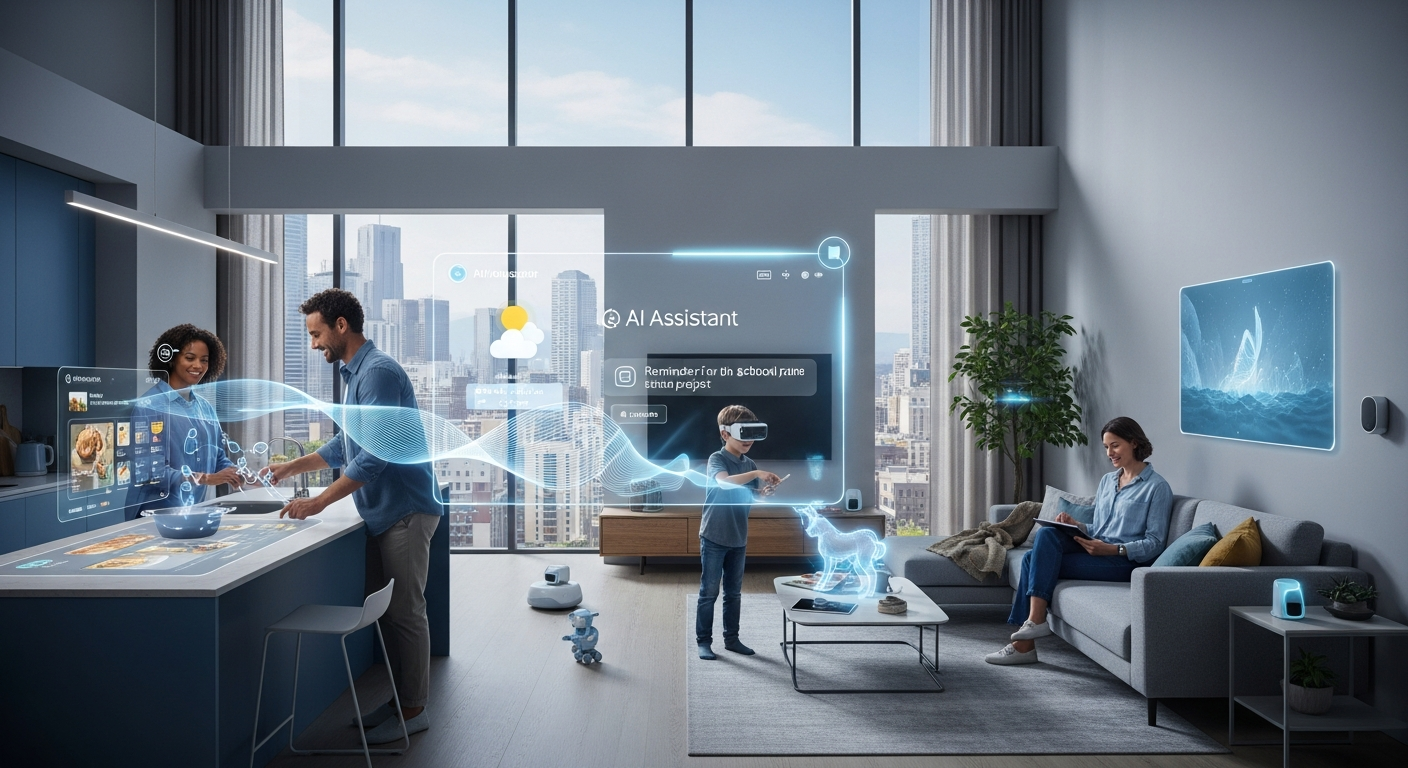
In the past decade, the idea of artificial intelligence (AI) was something for technologists, researchers or sci‑fi enthusiasts. Now, it is rapidly moving into the realm of everyday living—reshaping how we work, learn, relax and connect. This article explores how AI is already making inroads into daily life, what lies ahead, and how we as individuals and societies can prepare for a world where intelligent machines play an ever‑greater role.
Defining AI and Everyday Life
When we talk about the future of artificial intelligence in everyday life, we’re referring to how AI systems—software and machines that can learn from data, adapt their behaviour, interpret language or images, and make decisions—will become part of typical human routines.
“Everyday life” in this context means non‑specialist settings: our homes, our commute, our leisure time, our health, our work. Of course, many of these uses already exist. For example, smartphones use AI for voice commands, recommendation systems guide our streaming choices, smart thermostats learn household patterns. (Tableau)
But the coming years promise deeper and more integrated uses of AI: systems that anticipate our needs, act more autonomously, integrate across devices and contexts, and become more human‑aware. (Built In)
In short: the horizon is not just more AI, but better‑embedded AI—smarter, more seamless, more personal.
Current Applications: AI Today in Daily Life
Here are some of the ways AI is already present:
Smart Homes & Personal Assistants
From voice assistants that answer questions, to thermostats that adjust based on occupancy, AI is creeping into our home environments. One analysis notes that AI will make homes “smarter by automatically adjusting lights, temperature and security based on daily habits.” (Oklahoma City Indian Clinic)
Healthcare & Wellness
AI‑powered tools are helping with diagnostics, monitoring and predictions. According to one source: “AI is transforming industries and everyday life… from healthcare and finance to agriculture and cybersecurity.” (uc.edu)
Transportation & Mobility
AI in the form of navigation systems, driver‑assistance, autonomous ride services is advancing rapidly. The 2025 AI Index shows AI is “increasingly embedded in everyday life … from healthcare to transportation.” (hai.stanford.edu)
Work, Productivity & Services
In offices and customer‑service settings, AI tools automate repetitive tasks, provide insights, assist decision making. Beyond volume, the emphasis is shifting toward richer support. (Built In)
Education & Learning
Personalised learning platforms, AI tutors and adaptive feedback are starting to support students in new ways—especially where traditional resources are lacking. (Oklahoma City Indian Clinic)
These examples show how AI is already far from “just research”—it’s present, growing and reshaping how we live.
Key Trends Shaping the Near Future of AI
As we look forward, several trends are critical to how AI will evolve in everyday life:
1. Multimodal & More Natural Interfaces
AI is moving beyond single‑mode (text only or image only) to multimodal—systems that understand text, voice, image, video, perhaps even facial expressions. IBM describes that by 2034 we’ll see “multimodal status quo.” (IBM)
2. Personalisation and Hyper‑Contextual Services
By analysing behavioural patterns and preferences, AI will personalise experiences more deeply: your favourite playlist, your home environment, your commuting route—all adjusted dynamically. The “AI Trends” report for 2025 points to “hyper‑personalized customer experiences”. (Northwest Executive Education)
3. Democratisation of AI Tools
Just like websites became easier to make with templates, AI tools—smaller, efficient, accessible—will let more people build custom solutions. IBM notes a shift toward smaller, efficient models for easier adoption. (IBM)
4. Smart Infrastructure: Homes, Cities, IoT
AI’s integration will go beyond individual devices to networks of devices and systems: smart cities, intelligent energy grids, predictive maintenance of infrastructure. (en)
5. Ethics, Trust and Regulation
As AI moves into sensitive domains, questions of transparency, bias, fairness, safety will become central. The AI Trends piece lists “ethical AI and transparency” as a major future concern. (Northwest Executive Education)
Opportunities and Benefits
There are plenty of promising benefits from the future of AI in everyday life:
- Efficiency gains: AI can take over mundane tasks—allowing humans to focus on more meaningful work or leisure.
- Better decision‑making: With large‑scale data analysis, personal assistants or services can provide insights previously unavailable to individuals.
- Greater accessibility: Personalised education, wellness tools, support services can reach more people, including underserved populations.
- Comfort and convenience: Smart homes, adaptive environments, seamless services reduce friction in daily routines.
- Innovation in health and well‑being: Earlier diagnosis, personalised treatments, smart monitoring may transform health outcomes.
For example, AI’s expanding role in healthcare and smart living is highlighted in multiple reviews. (uc.edu)
Risks, Challenges and Ethical Considerations
No technology is without its trade‑offs. As AI becomes more embedded, we must guard against potential pitfalls:
- Bias, fairness and transparency: AI systems trained on biased data may perpetuate inequities or make unfair decisions.
- Privacy & surveillance concerns: The more AI knows about our lives, habits, personal data—the greater the risk that data is misused.
- Skill displacement & dependency: Some jobs may be replaced, and humans may become overly dependent on AI systems—raising resilience questions.
- Loss of agency: When AI subtly nudges our preferences, are we still choosing freely?
- Safety and robustness: As AI controls more infrastructure, homes, mobility—failures may become critical.
- Digital divide: Those who lack access to AI‑enabled services may be left further behind.
Because AI is “increasingly embedded in everyday life” from transportation to health, the stakes are rising. (hai.stanford.edu)
Preparing for an AI‑Augmented Life
How can you, as an individual or an organisation, prepare for this shift?
For Individuals
- Develop adaptability and continuous learning: As routines change, the willingness to learn new tools and ways of working is key.
- Cultivate digital literacy: Understand what AI does, its limitations, how your data is used.
- Protect your privacy: Be mindful of devices and services that gather personal data and check how your information is handled.
- Focus on human‑unique skills: Creativity, empathy, judgement, ethics—areas where humans still excel.
- Stay informed: The ethical, legal, social implications of AI are evolving fast—keep up with developments.
For Organisations & Communities
- Embed ethics and governance in AI deployment: Make sure AI systems are transparent, explainable and fair.
- Invest in infrastructure and access: Ensure that the benefits of AI are inclusive.
- Upskill workforce: The future will involve human‑AI collaboration rather than pure replacement—so equip people accordingly.
- Design for human‑AI symbiosis: Align AI systems to support humans, not just replace them.
Conclusion
The future of artificial intelligence in everyday life is not simply more machines; it’s smarter, more integrated, more personal machines working alongside humans. From our homes to our workplaces, from how we learn to how we stay healthy—AI has the potential to reshape the contours of modern living.
That said, the value of AI will not come by default. It will come from thoughtful deployment—systems built responsibly, human values preserved, and accessibility extended. The question isn’t just what AI will do for our lives, but how it will do it.
For anyone reading this: the future is already knocking at the door. How we open it, what we let in, what we choose to share with these intelligent systems—that will determine whether AI becomes a servant of human flourishing or a source of unforeseen challenge.